Performance is a need for survival and success in the dynamic digital environment we live in today. In order to automate everyday life and free up their employees to concentrate on higher-level strategic tasks, organizations constantly aim to get more out of less.
This is the point at which process automation and artificial intelligence combine to bring in a new era of production. Nowadays, the top priority on the list of progressive firms is the search for the best AI workflow automation software. They are the driving force behind modern, agile operations and are no longer a waste.
This article will explore the topic of AI workflow automation software, elucidating its definition and importance. We will evaluate the leading competitors in the industry and provide you all the information you need to choose the best AI productivity tools of 2025 to maximize your company's potential.
What is an AI Automation Tool?
A software application that uses artificial intelligence to carry out activities and run processes with little assistance from humans is known as an Artificial Intelligence (AI) tool. Solutions based on artificial intelligence may learn from data, adjust to changing circumstances, and work with unstructured data, in comparison with classical automation, which is established using a strict preset rule.
Legacy automation functions great but it only goes where the rails lead. Think of it like a train on a fixed track. As a result, an artificial intelligence workflow automation tool is more similar to an automated car. It is capable of navigating in challenging situations and selecting the best course of action given the circumstances.
These software tools are extremely capable of handling complex business processes since they can scan photos, evaluate natural language, forecast results, and even create content.
Why You Should Use AI Workflow Automation Tools?
The benefits of utilizing these tools in your business cycles are deep and have a direct impact on your bottom line.
- Massive Increase in Efficiency: By executing routine and time-consumption jobs, you can trim substantially the effort and time required to complete projects. This releases your personnel to work on high-value tasks that require human intellect and strategic thinking.
- Fewer Human Mistakes: Keying in data and performing routine tasks are prone to human mistakes. Automation ensures a standard, mistake-free process, meaning higher-quality data accuracy and overall quality.
- Improved Availability: As business grows, so does the burden. Artificial intelligence (AI) solutions enable you to grow your business effectively and affordably by managing a significant rise in volume without requiring an equal rise in human resources.
- Better Decision Making: You may identify errors and make quicker, more intelligent decisions by using artificial intelligence which give you real-time data-driven insights on your company's activities.
What Makes the Best AI Workflow Automation Tools?
With a crowded market of AI tools for business efficiency, how do you choose the right one? The best platforms share a few key characteristics:
- Ease of Use: A visual user-friendly interface must be simple to use. The finest tools offer developers strong capability while remaining accessible to non-technical end users.
- Deep Integrations: Your tool must work with a wide range of programs that you now use, from communications and data storage systems to marketing and CRM software.
- Intelligence-Native Features: Seek out platforms that are built on AI rather than having it added. These include of functions like intelligent data extraction and AI-powered workflow builders.
- Availability: The platform must be able to accommodate the growth of your business without experiencing significant drops in performance as task quantities increase.
- Security: Security and data privacy are of the highest priority. Strong security capabilities, compliance certifications, and self-hosting options are found in the best solutions.
Top 10 Best AI Workflow Automation Tools (2025)
Here is a detailed breakdown of the leading AI workflow automation software and AI tools for business efficiency available today.
1. Zapier
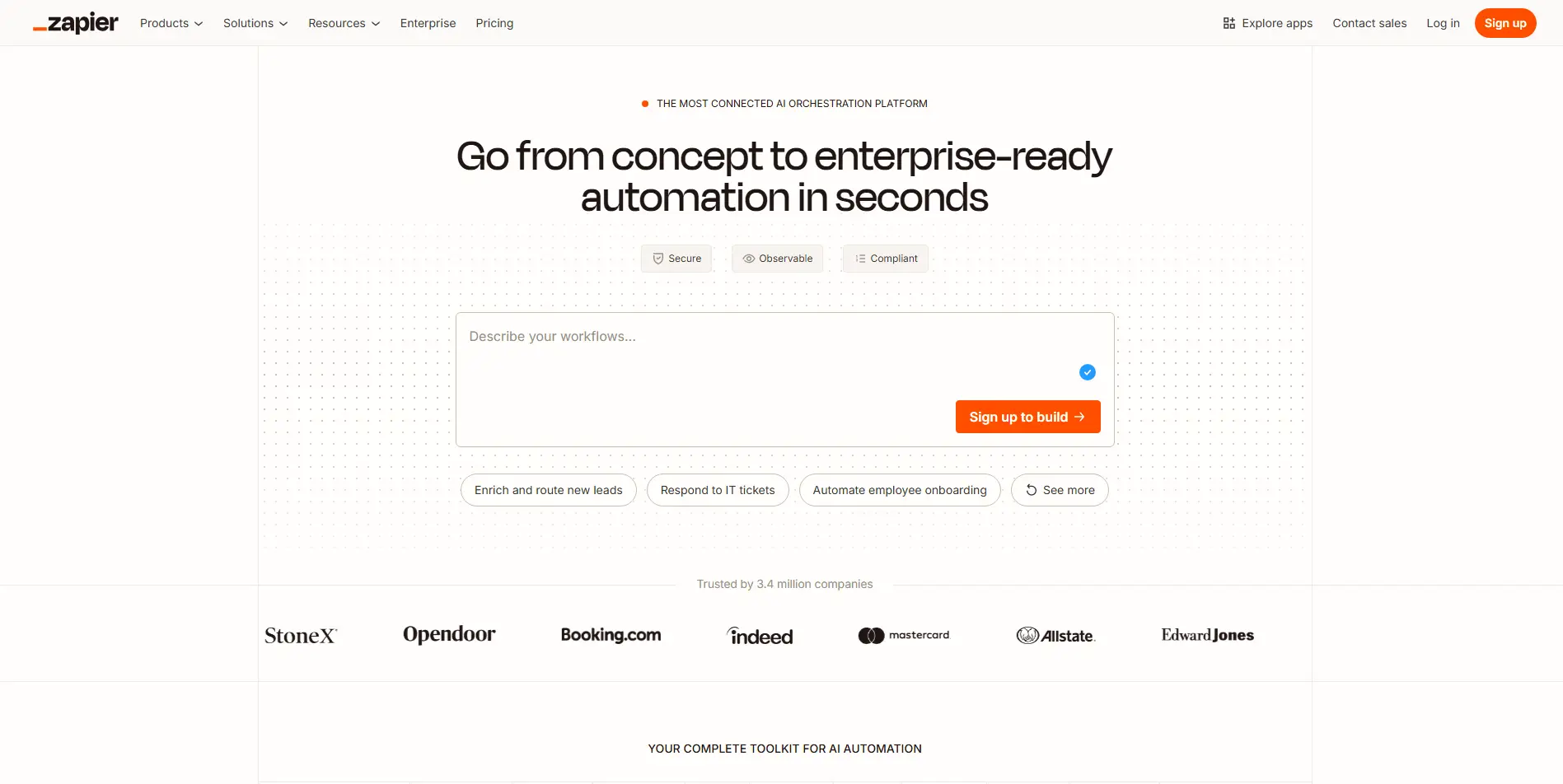
Zapier is one of the most well-known brands in automation and is renowned for its ease of use and vast network of over 5,000 app connectors. It opens the door for automating to millions of people through allowing users to build "Zaps," which are automated processes that connect their services and apps without the need for coding.
Best Use Case: Connecting web apps easily.
Price: $19.99 permonth.
Rating: 4.8/5
Founded: 2011
Features:
- Visual node-based workflow builder
- 400+ integrations / connectors
- Self-hosting or cloud deployment
- Ability to embed custom code / Node.js
- Support for queues, concurrency, error handling
- AI model integrations / extensions
Pros:
- Unmatched number of app integrations.
- Extremely user-friendly for beginners.
- Reliable and stable platform.
Cons:
- Can become expensive for complex workflows with high task volumes.
- Less flexible for highly complex, conditional logic compared to code-based alternatives.
2. Make
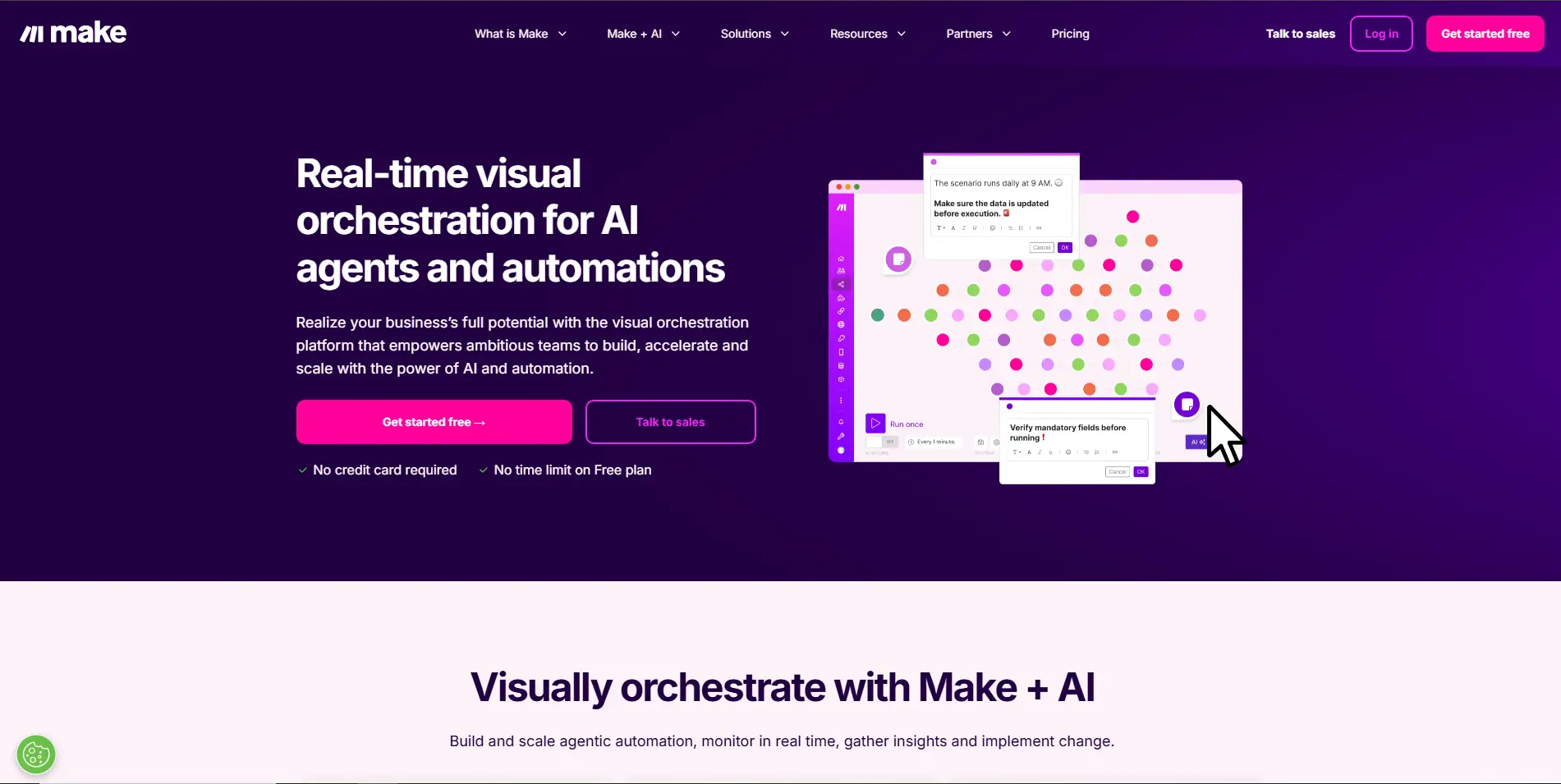
Make is a robust visual automation utility that offers great flexibility and control. Make builder also has a flow-chart-like interface, allowing users to create complex, multi-branch workflows with richer data transformation capabilities and is a power user favorite.
Best Use Case: Complex, multi-step workflow logic.
Price: $9 permonth.
Rating: 4.7/5
Founded: 2012
Features:
- Drag-and-drop interface
- Rich connectors / app modules
- Data transformation (filters, aggregations)
- Scenario scheduling, error handling, logs
- Support for webhooks, APIs
Pros:
- Superior flexibility and control over workflow logic.
- More affordable for complex workflows compared to competitors.
- Excellent visual representation of the entire process.
Cons:
- Steeper learning curve than Zapier.
- The interface can feel overwhelming to complete beginners.
3. N8N
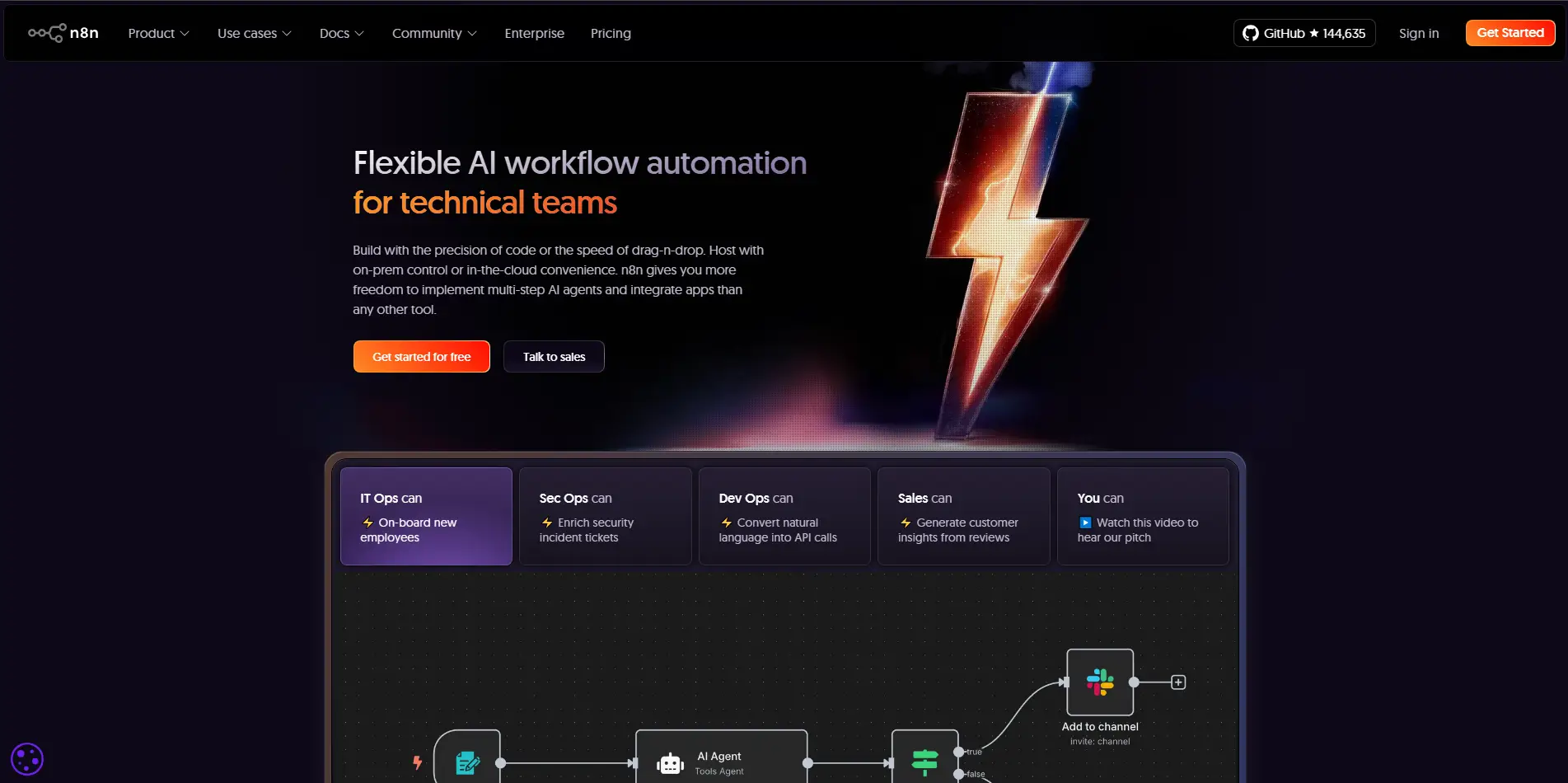
N8N is an open-source workflow automation platform that technically savvy users and developers adore. Its fair-code model allows for self-hosting and extreme customization, giving the control to build highly integrated and highly specialized automation solutions in your own infrastructure.
Best Use Case: Self-hosted, custom-coded automations.
Price: $20 permonth.
Rating: 4.8/5
Founded: 2019
Features:
- Visual agent builder (no-code)
- Templates for common agent workflows
- Integration with APIs, webhooks
- Model comparison (latency, cost, quality)
- Monitoring & management of deployed agents
Pros:
- Ultimate flexibility and control with open-source code.
- Strong data privacy through self-hosting.
- Cost-effective for high-volume usage.
Cons:
- Requires technical expertise to set up and maintain, especially self-hosted.
- Less "out-of-the-box" simple than cloud-only solutions.
4. Bardeen
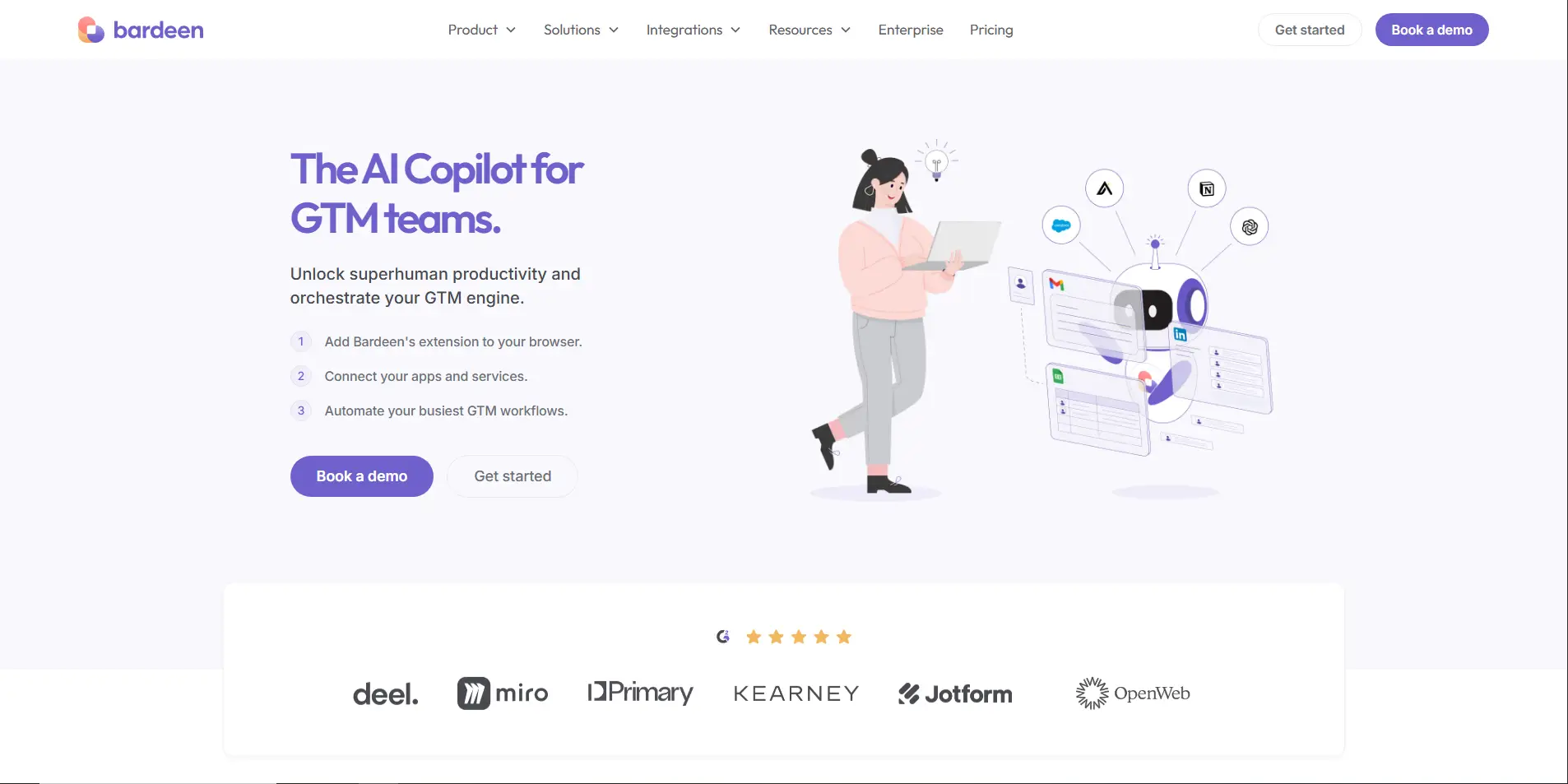
Bardeen takes a unique approach by focusing on browser automation and leveraging AI to suggest context-aware automations ("magic"). It specializes in automating tasks within your browser tabs like scraping data or managing leads and making it perfect for sales and marketing professionals.
Best Use Case: Automating browser-based tasks.
Price: $10 permonth.
Rating: 4.7/5
Founded: 2020
Features:
- Automated data analysis & insights
- Integrations with data sources
- Generate visual reports, dashboards
- Alerts / trigger workflows based on metric thresholds
Pros:
- Excellent AI-based contextual suggestions.
- Superb for automating actions on websites without APIs.
- Quick to set up and launch with one-click playbooks.
Cons:
- Less focused on backend and app-to-app integrations.
- Automations are tied to the browser being open (for some types).
5. MindStudio
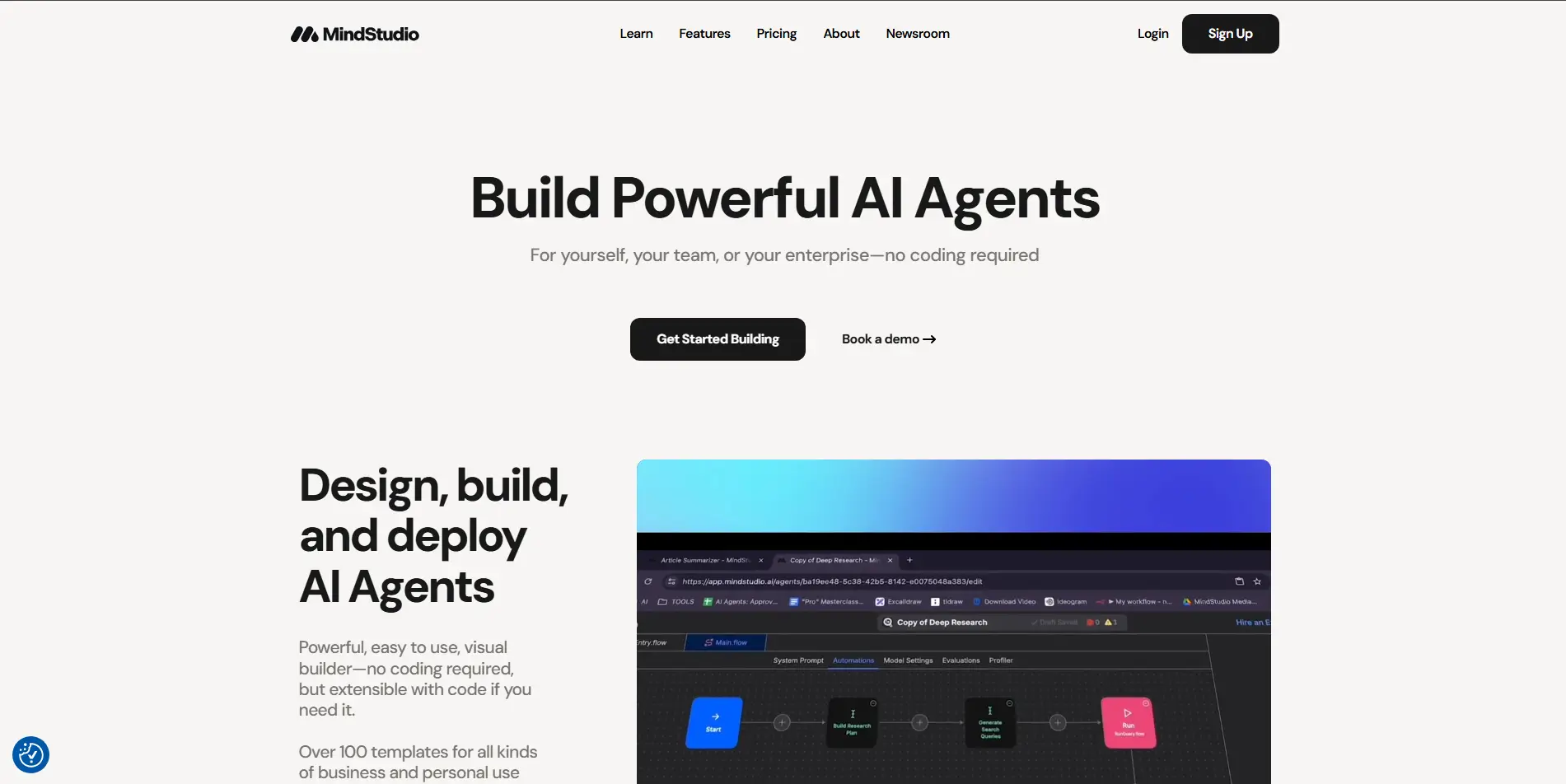
MindStudio is a platform that allows you to create, train, and deploy your own custom-built AI automation apps without coding. It allows you to create expert AI agents who are capable of performing specific business tasks by combining multiple data sources and AI models in one unified workflow.
Best Use Case: Building custom AI agents.
Price: Based on usage.
Rating: 4.9/5
Founded: 2022
Features:
- Decision-to-action automation
- AI reasoning / inference + action triggers
- Integration with other systems to execute follow-ups
Pros:
- Unparalleled ability to create bespoke AI tools.
- No coding skills required.
- Solves very specific business problems with AI.
Cons:
- Requires a clear understanding of the process you want to automate.
- Can have a learning curve for designing effective AI prompts and logic.
6. Julius
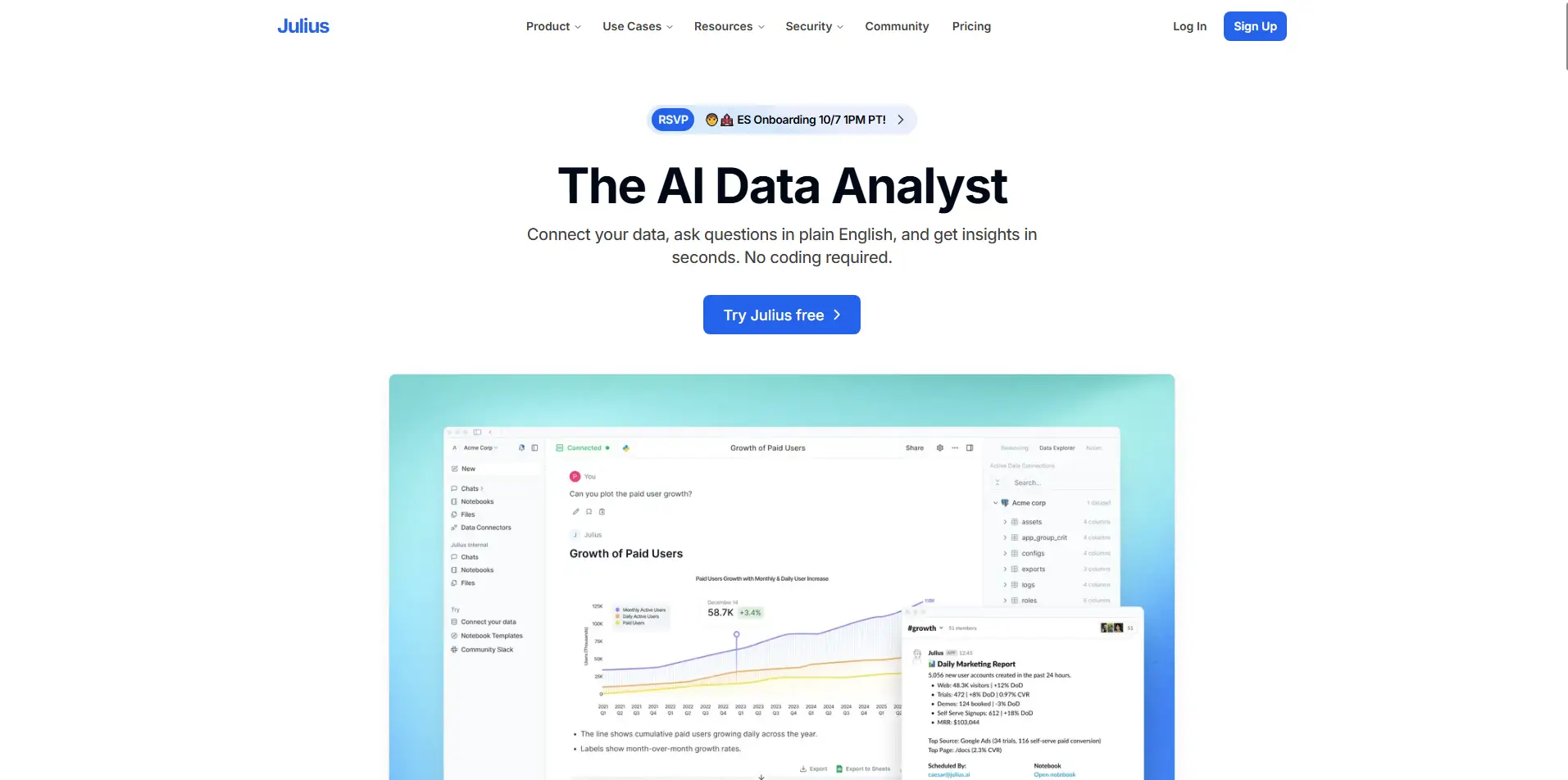
Julius is a computer application designed with data analysis and visualization in mind. You may ask difficult questions about your data in plain English and get well-explained responses and predictions—it's like having your own personal data analyst.
Best Use Case: Analysis and visualization.
Price: $19.99 permonth.
Rating: 4.5/5
Founded: 2022
Features:
- Workflow orchestration across multi-agent systems
- Monitoring, state management, triggering
- Agent coordination across tasks
Pros:
- Makes advanced data analytics accessible to everyone.
- Fast and conversational.
- Powerful for forecasting and trend identification.
Cons:
- Niche focus on data analysis rather than broad workflow automation.
- Dependent on the quality and structure of the input data.
7. Actionize
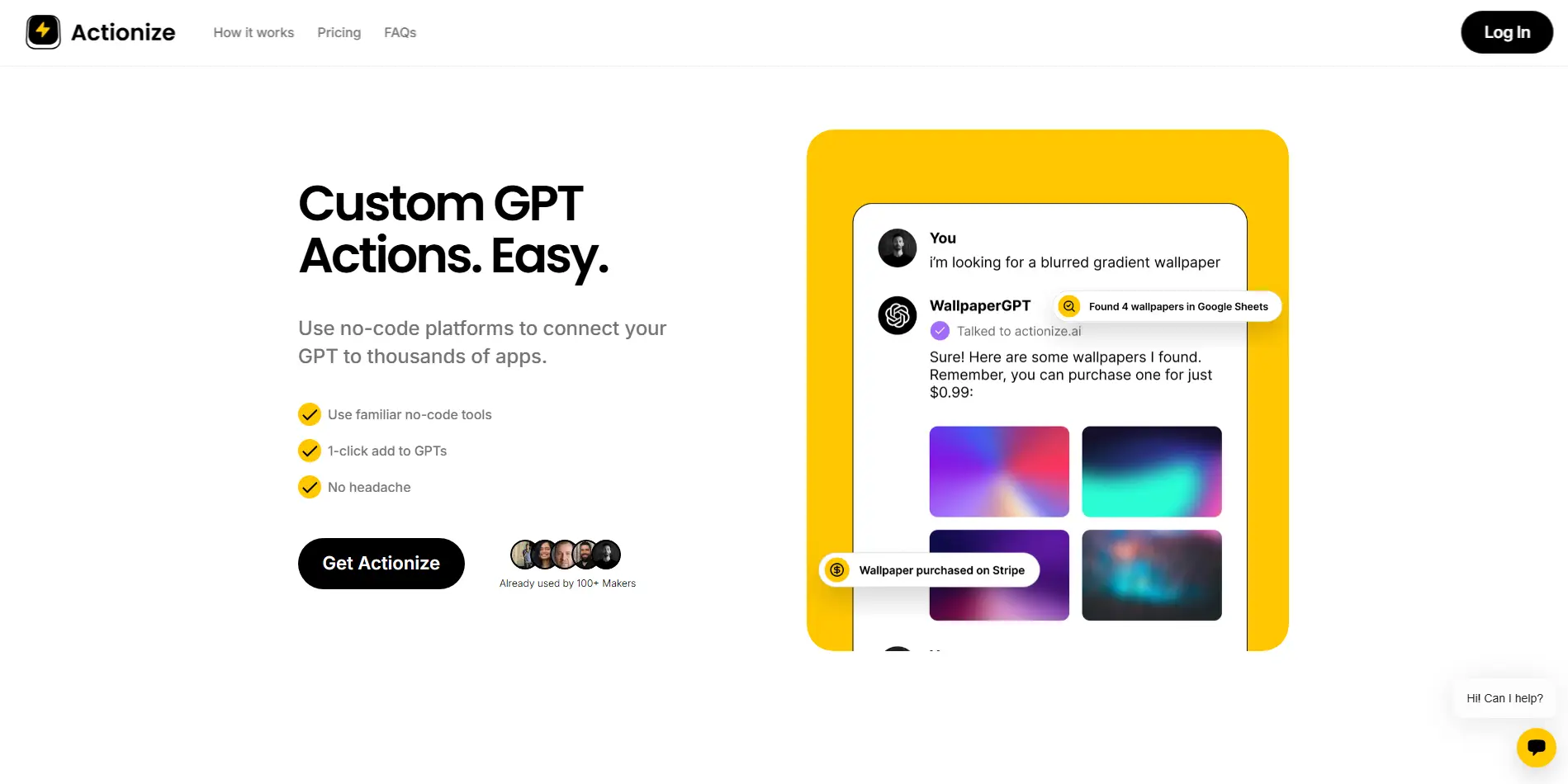
Actionize transforms flat text descriptions into usable automations using creative Artificial Intelligence. Actionize's AI will create the workflow for you if you only explain what you want to achieve in natural language. This will save you a significant amount of time and knowledge when it comes to getting automation up and running.
Best Use Case: Turning text into automations.
Price: Free
Rating: New to market
Founded: 2023
Features:
- Branching / conditional quest-style workflows
- AI-based decision points
- Integration with external APIs / services
Pros:
- Extremely low barrier to entry.
- Accelerates automation development time.
- Intuitive for the AI-native generation.
Cons:
- Newer platform with a smaller track record.
- May lack the depth and control of established platforms for now.
8. Coflow
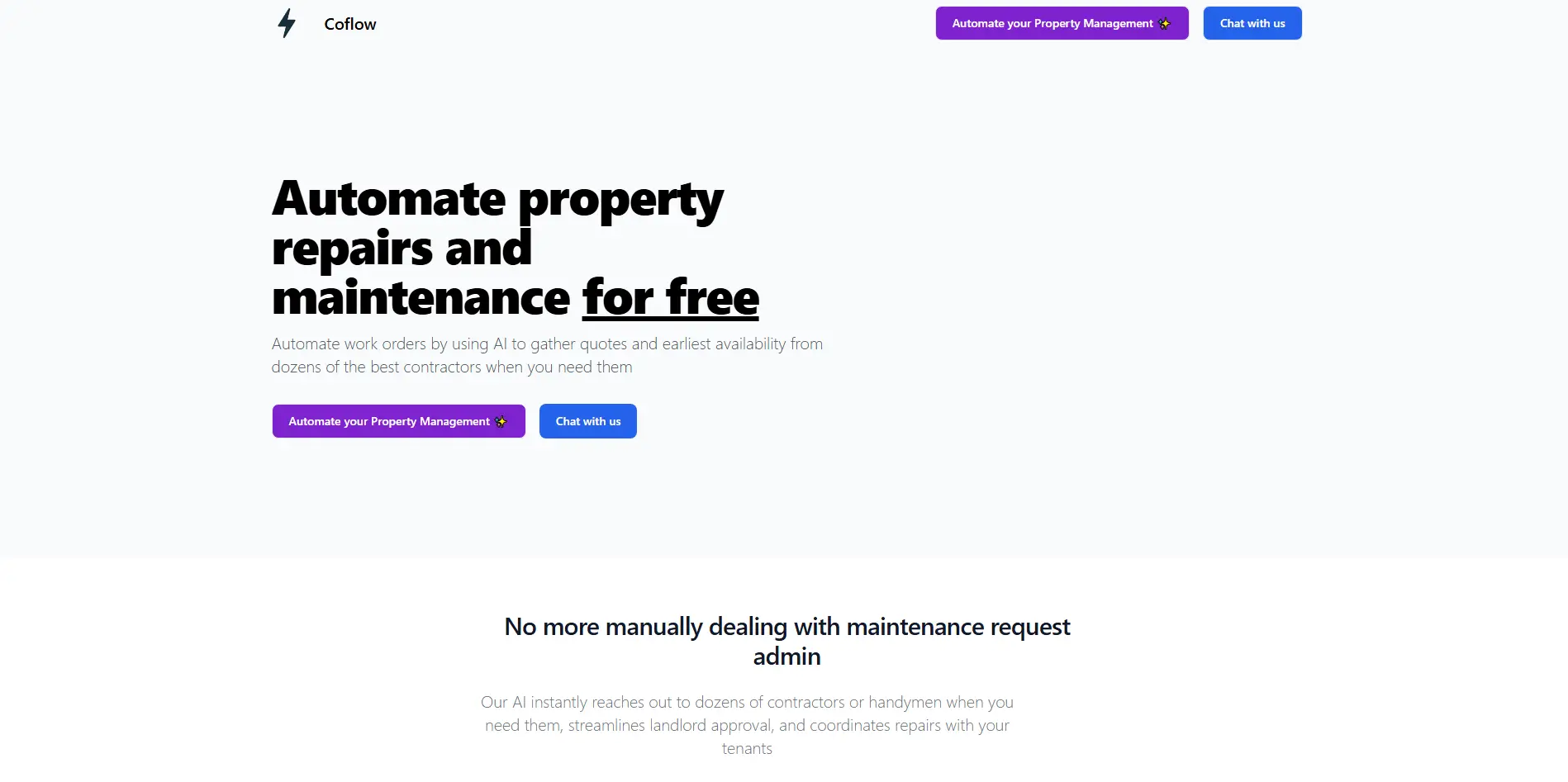
Coflow is a new platform that concentrates on automating difficult and open workflows. By giving teams a common area to plan and keep an eye on complicated processes, it seeks to close the gap between basic task automation and complex business process management (BPM).
Best Use Case: Collaborative team approval workflows.
Price: Contact for pricing.
Rating: New to market
Founded: 2023
Features:
- Browser automation (web scraping, form filling)
- No-code playbooks
- Integration with web apps and APIs
- Conditional logic, scheduling
Pros:
- Designed for team-based, collaborative workflows.
- Excellent for processes requiring approvals and human judgment.
Cons:
- Newer and less proven than established competitors.
- Pricing is not transparent.
9. Questflow
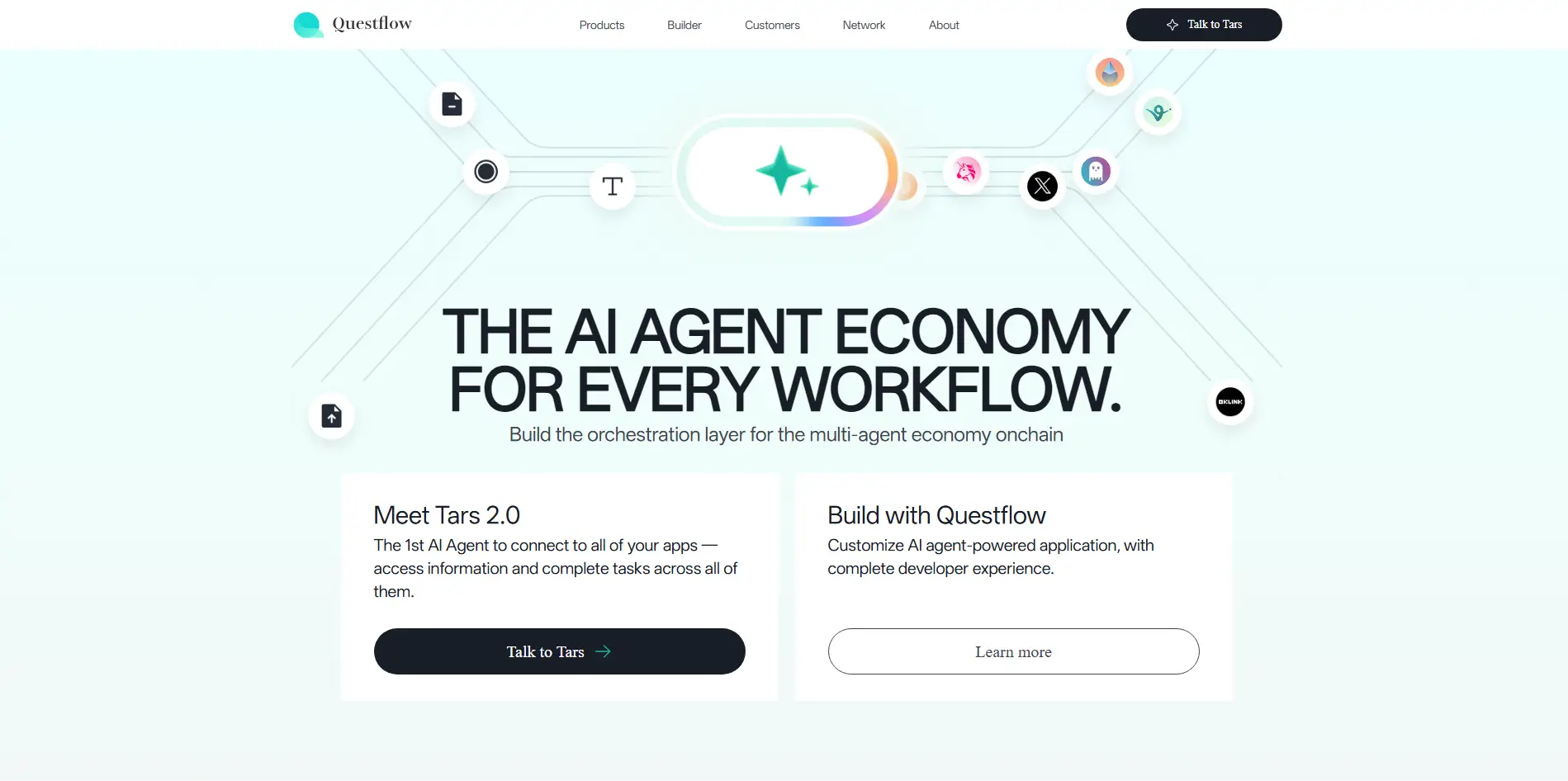
Questflow is a community driven and open automation network. On this platform people can design, distribute, and even make money off of their automations which is also known as Quests. Transparency and a new paradigm for cooperative automation development are provided by its blockchain-based technology.
Best Use Case: Web3 and crypto tasks.
Price: Token-based economy.
Rating: New to market
Founded: 2022
Features:
- AI-native automations
- Integration / agent orchestration
- Domain-custom logic
Pros:
- Innovative decentralized model.
- Potential to monetize created workflows.
- Strong in the emerging Web3 space.
Cons:
- Niche appeal, primarily for Web3-savvy users.
- Complex concept for traditional businesses.
10. Mazaal.ai
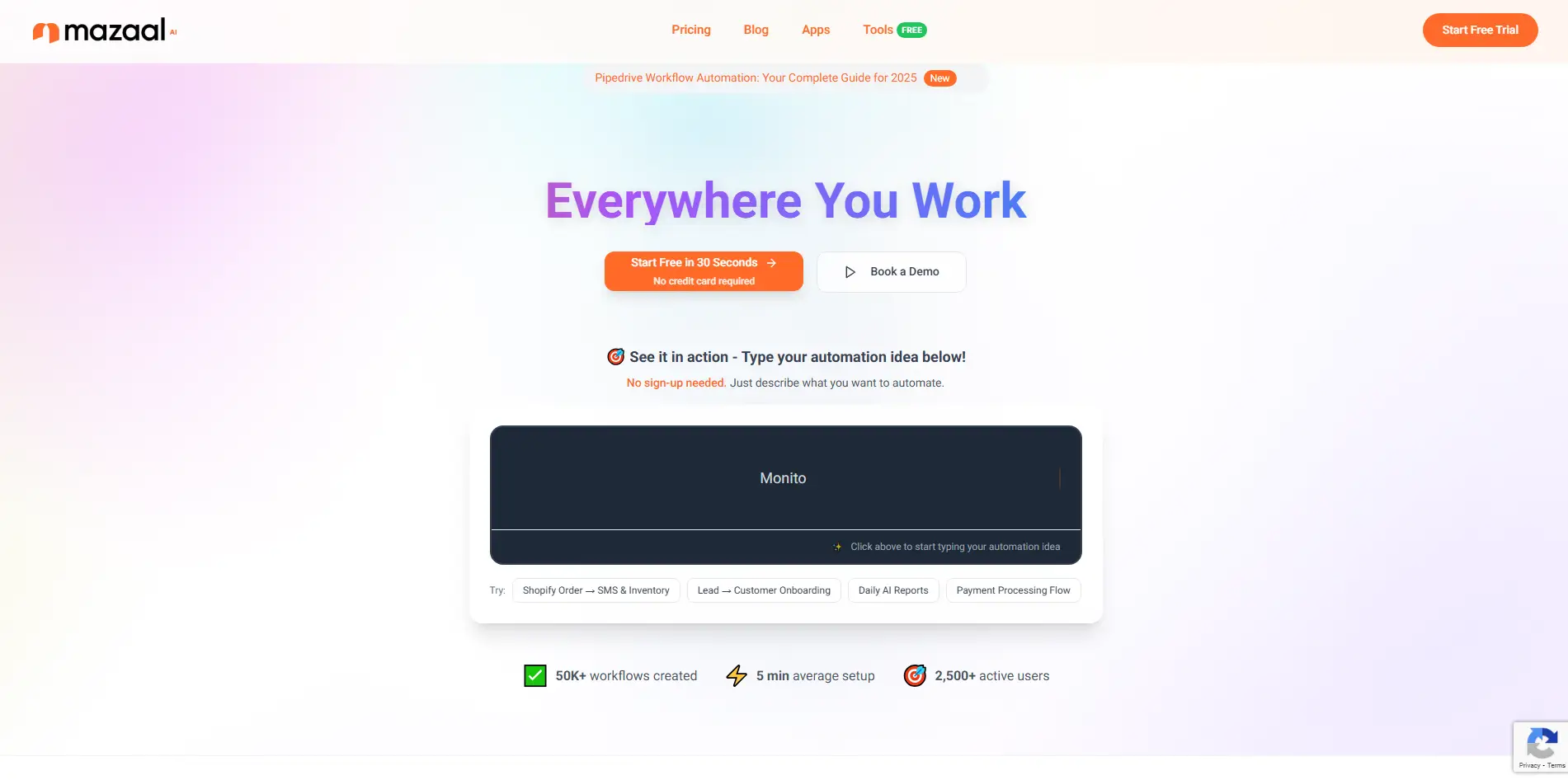
Mazaal AI positions itself as an intelligent automation platform that uses AI to not only execute tasks but also to optimize and discover new automation opportunities within your existing workflows. It focuses on continuous improvement and intelligent process discovery.
Best Use Case: Enterprise process optimization.
Price: Enterprise pricing.
Rating: New to market
Founded: 2023
Features:
- 8000+ app integrations
- Trigger-action workflows (“Zaps”)
- AI model integrations (ChatGPT, Claude, etc.)
- Paths, filters, multi-step Zaps
- Logging, debugging, monitoring
Pros:
- Proactive in finding and suggesting automations.
- Focuses on optimization, not just execution.
- Powerful for enterprise-level process analysis.
Cons:
- Likely overkill for small businesses and simple needs.
- Enterprise pricing model.
Conclusion: Choosing Your Ideal AI-Powered Workflow Management Solution
The landscape of AI workflow automation software is vibrant and diverse, offering solutions for every use and technical level. From the accessibility titans Zapier and Make, to the bespoke power of n8n, and the specialized AI capabilities of MindStudio and Julius, the right tool simply depends on your personal challenges.
In selecting, consider your in-house technical expertise, the complexity level of your processes, your costs, and your integration needs. Start small, automate a painful process, and measure the efficiency gains.
The goal of implementing these AI solutions to business efficiency is to create a more agile, innovative, and productive firm where human abilities are being supplemented by intelligent automation.
The future of work is an automated future, and with these tools at your disposal, you're more than capable of driving the charge.